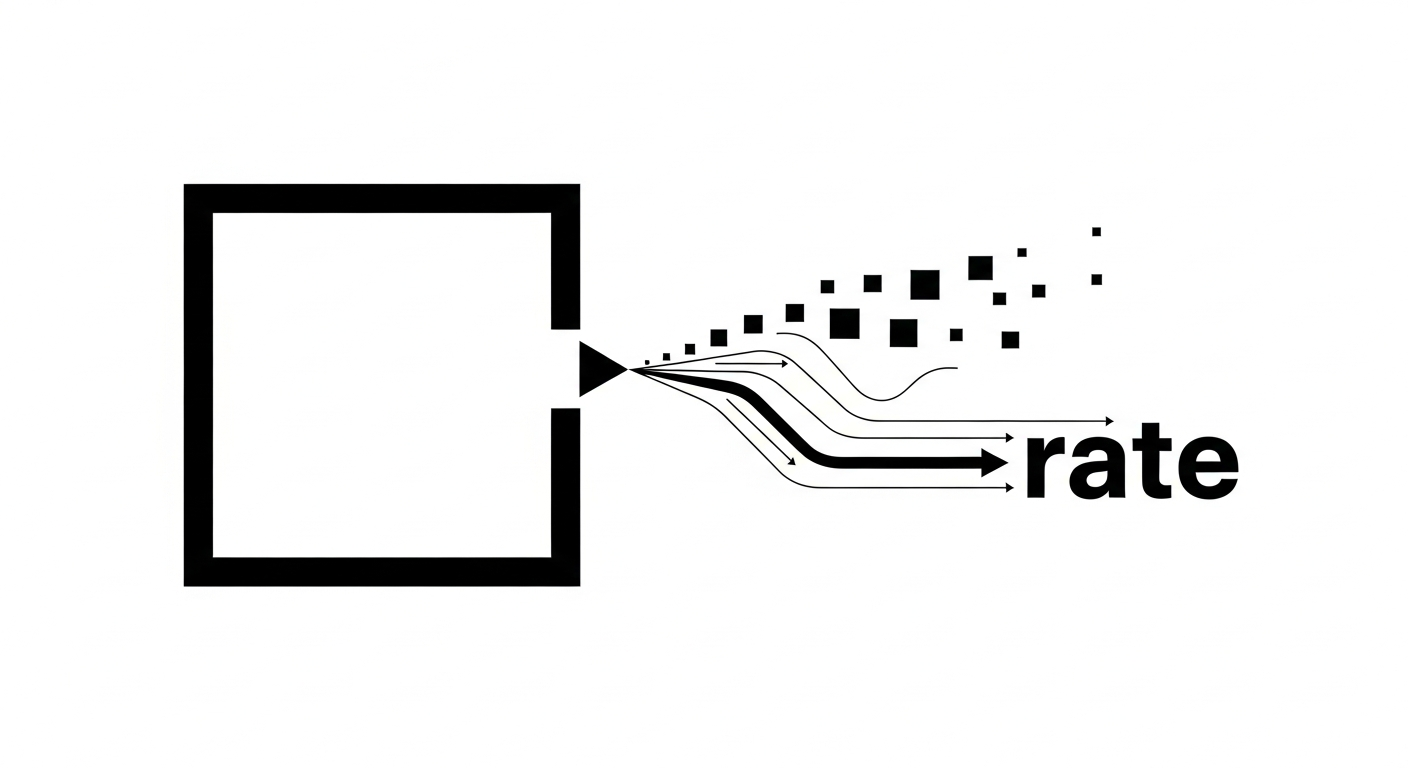
You've probably heard the question: "What's the next frontier after quantum computing?" It's a natural impulse to look for the next big thing, the singular breakthrough that redefines everything. But what if the frontier isn't a thing at all? What if it's a rate? The real story unfolding right now isn't a specific technology, but the compounding acceleration of discovery itself, powered by AI. This isn't about one lab making a leap; it's about every lab, every researcher, every curious mind shortening the loop between question and answer, simultaneously.
The Shifting Landscape of Discovery
For decades, scientific discovery followed a relatively predictable path. A hypothesis, years of painstaking experimentation, data collection, analysis, peer review, and then, perhaps, a breakthrough. Each step was a bottleneck, limited by human capacity, computational power, and the sheer time it took to iterate. Think of the decades-long journey to map the human genome, or the slow, incremental progress in materials science.
Now, AI is fundamentally altering this cadence. It's not just making existing processes faster; it's enabling entirely new modes of inquiry. Imagine a materials scientist no longer spending months synthesizing and testing compounds, but instead using AI to predict optimal structures and properties in days, then validating the most promising candidates. This is the essence of ai-accelerated-discovery.
From Bottleneck to Multiplier
Where human intuition and manual labor once created bottlenecks, AI acts as a multiplier. Consider these shifts:
- Hypothesis Generation: AI can sift through vast datasets of existing research, identifying patterns and connections that human researchers might miss, suggesting novel hypotheses for investigation.
- Experimental Design: Machine learning algorithms can optimize experimental parameters, reducing the number of trials needed and increasing the likelihood of success.
- Data Analysis: AI can process and interpret complex data sets — from genomic sequences to astronomical observations — at scales and speeds impossible for humans, extracting insights and anomalies.
- Simulation and Modeling: Advanced AI models can simulate complex systems with unprecedented accuracy, allowing researchers to test theories and explore scenarios virtually before committing to physical experiments.
This isn't about replacing human ingenuity, but augmenting it. AI handles the grunt work, the pattern recognition, the sheer computational load, freeing up human minds for higher-level creative thought, critical analysis, and the formulation of truly novel questions.
The Compounding Effect: A New Kind of Growth
The most profound aspect of this shift is the compounding effect. When the cycle of question-experiment-answer shortens across multiple domains simultaneously, the rate of knowledge accumulation doesn't just increase linearly; it grows exponentially. Each new insight, rapidly validated and integrated, becomes a building block for the next, faster than ever before.
Think about drug discovery. What once took a decade and billions of dollars can now be compressed significantly. AI can identify potential drug candidates, predict their efficacy and toxicity, and even design novel proteins, all at a pace that was unimaginable even five years ago. This isn't just a faster way to find existing drugs; it's a faster way to discover entirely new therapeutic approaches.
This accelerated pace isn't confined to a single field. It's happening in:
- Materials Science: Designing new alloys, polymers, and catalysts with specific properties.
- Climate Modeling: Refining predictions and developing mitigation strategies.
- Astrophysics: Analyzing cosmic data to uncover new phenomena.
- Biotechnology: Engineering enzymes, understanding disease mechanisms, and developing gene therapies.
Each of these advancements, fueled by ai-accelerated-discovery, feeds into the others, creating a virtuous cycle of innovation. The 'frontier' isn't a distant peak we're striving for; it's the ever-expanding horizon of what's possible, moving faster than we've ever witnessed.
What This Means for You
If you're a researcher, a founder, or simply someone trying to understand where the world is headed, this shift has profound implications. It means:
- The half-life of knowledge is shrinking. What was cutting-edge yesterday might be foundational today.
- Interdisciplinary collaboration is more critical than ever. The biggest leaps often happen at the intersection of fields, now accelerated by AI's ability to bridge disparate data sets.
- The ability to ask the right questions becomes paramount. If AI can answer almost anything, the value shifts to formulating the most impactful inquiries.
We're not just building faster tools; we're building a faster future. The next frontier isn't a static destination; it's the dynamic, ever-increasing velocity of human understanding, amplified by AI. It's a rate, and it's accelerating.
See what we've made — totalventures.io
Weekly Briefing
The studio briefing.
What we’re building across the portfolio, every Monday.
Written by
Founder, Total Ventures
Solo-founder building and operating a multi-brand product studio with AI agents. Writing about building, operating, and shipping.