Running a targeted search campaign sends visitors directly to a landing page's main sign-up component. When those visitors land, the page performs its job or it fails. If visitors leave without acting, the natural instinct is to assume the ad audience was wrong, the keywords were off, or the creative lacked punch. More often, the channel did exactly what it was supposed to do. It brought interested people to the door. The destination simply failed to open it.
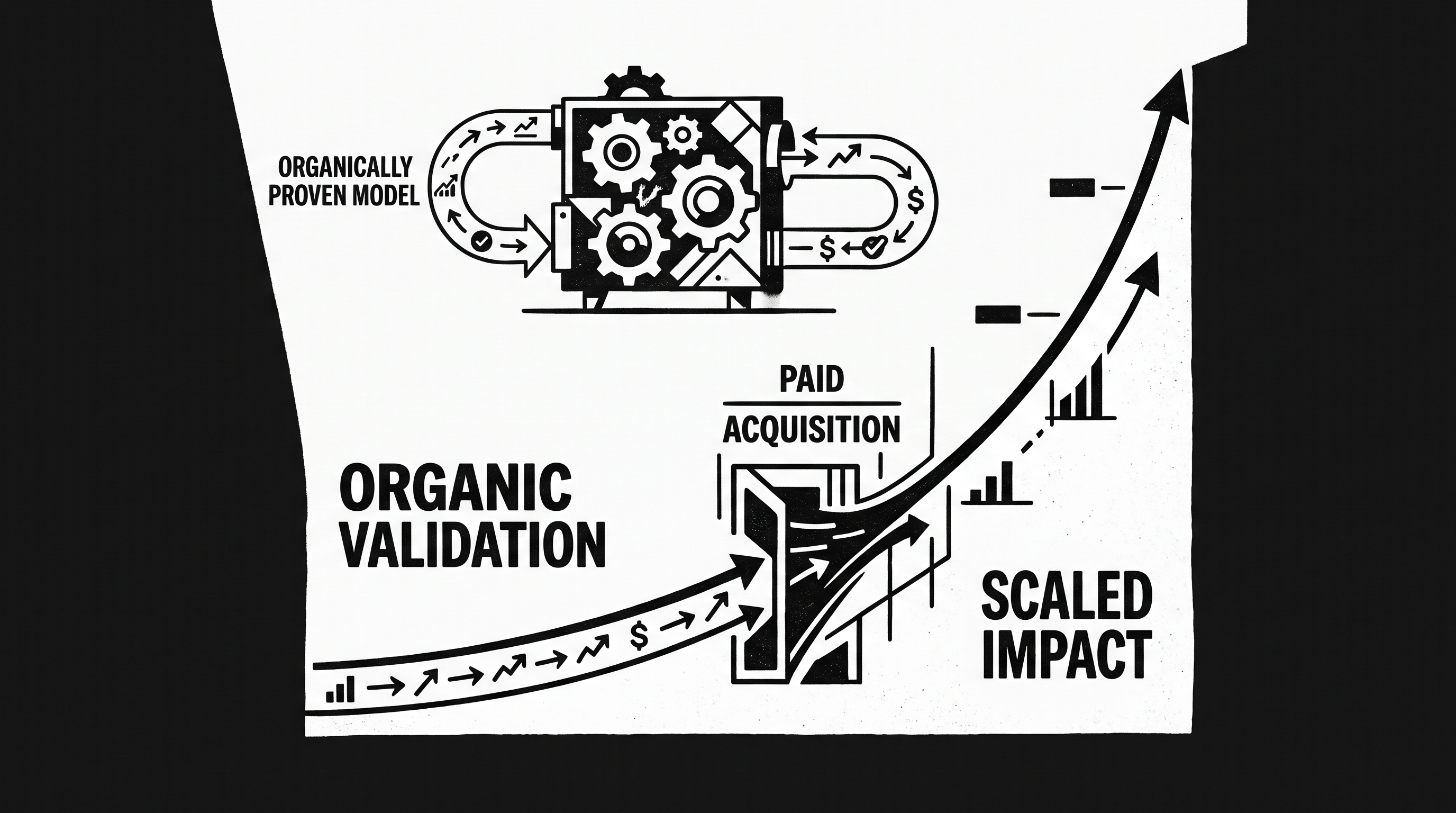
Paid channels do not create intent out of nowhere; they amplify what is already present. Pointed at an application with clear messaging and a smooth conversion path, paid traffic scales user acquisition predictably and fast. Pointed at an unproven destination, it buys an immediate, expensive stream of rejections. The data coming back from those bounces is not a judgment on the advertising channel. It is diagnostic output about the landing page.
What Paid Traffic Actually Measures
When a visitor arrives from organic search or a direct recommendation, they usually bring context. They might have read an article, heard about the software from a colleague, or followed a project's development over months. That pre-existing trust covers up design flaws, vague headlines, and clunky sign-up flows. High-context visitors work harder to find what they need because they already believe the product is worth the effort.
Paid traffic arrives with almost zero baseline trust. A user who clicks an ad has spent two seconds reading a headline. They land on the page looking for immediate confirmation that they are in the right place, that the product solves their specific problem, and that taking the next step is simple.
If the landing page relies on implicit knowledge or abstract promises, cold visitors drop off instantly. When that happens, tweaking ad copy or testing new demographic filters misses the core issue. The ad platform successfully delivered a user looking for a solution. The landing page failed to prove it had one.
The Cost of Diagnosing the Destination
Using paid acquisition to test whether a landing page works is technically effective, but it is the most expensive diagnostic tool available. Every bounce costs money that could have been spent on product development or clearer positioning.
When a page converts zero paid visitors, you learn that something is wrong, but you rarely learn which specific element broke the trust. Was the headline too broad? Did the primary call to action get lost below the fold? Was the pricing model confusing? Is the sign-up form asking for too much information upfront?
Because paid traffic carries low context and high friction sensitivity, a failure at the top of the page prevents you from gathering useful data on the steps below it. You end up paying for visitors who turn around at the threshold without interacting with the core product value.
Building Conversion Before Buying Reach
Before routing paid traffic to a page, establish a baseline with low-friction, high-clarity assets. A landing page is ready for paid acquisition when it demonstrates consistent behavior with neutral visitors—people who found the page through un-leveraged channels like raw search results or direct links.
A page ready for ad spend usually shares a few distinct characteristics:
- A singular, explicit value proposition: The top section answers what the software does, who it is for, and what happens next without requiring a scroll.
- Tightly matched ad expectation: The primary headline on the page echoes the exact promise made in the snippet or ad creative that brought the user there.
- A frictionless first action: The sign-up process requires minimal effort to reach the first moment of actual utility.
- Zero competing destinations: Secondary navigation, unnecessary footer links, and distracting secondary offers are removed so the focus remains entirely on the core conversion path.
When these elements are in place, cold visitors can evaluate the product on its merits rather than getting tripped up by structure.
Fixing the Page First
If a campaign is yielding high click-through rates on ads but zero conversions on the page, stop adjusting the ad account. Focus entirely on the destination.
Start by stripping away general language. Replace vague promises with specific descriptions of what the software executes. Ensure the call-to-action button uses action-oriented language that describes the outcome rather than the administrative step—"Start building" or "View the workspace" almost always outperforms a generic submission label.
Once the destination page reliably converts visitors who arrive without background context, paid channels become predictable growth engines. Until then, hold the budget. Fix the page first, and let paid traffic do what it does best: amplify a result that already works.
Weekly Briefing
The studio briefing.
What we’re building across the portfolio, every Monday.
Written by
Founder, Total Ventures
Solo-founder building and operating a multi-brand product studio with AI agents. Writing about building, operating, and shipping.