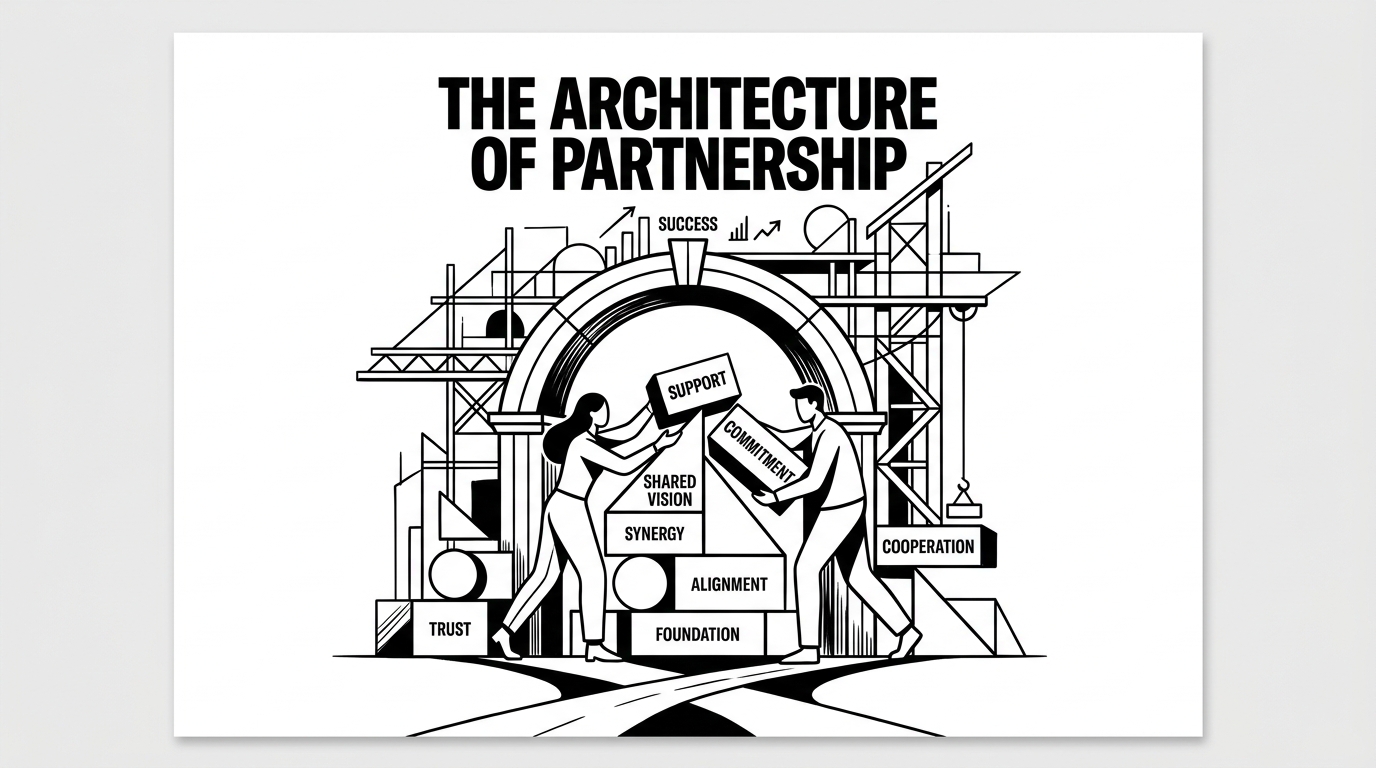
Total Ventures routes every incoming proposal through 3 distinct operational paths to ensure the studio’s resources are allocated with precision. This is a matter of maintaining the craft. When a studio operates at a specific cadence, the introduction of external projects cannot be a matter of "finding more work." It is a matter of identifying where the existing system can provide the most leverage for a product that already deserves to exist.
The relationship between a digital product studio and its partners is often obscured by vague terminology. To avoid this, we treat the partnership application as a routing mechanism. It is designed to filter for intent, capacity, and technical fit before a single line of code is reviewed or a contract is drafted. This clarity protects the partner’s time as much as the studio’s focus.
Technical Integration and the Operating System
The first path is for established businesses that require a structural overhaul. This is not a traditional agency-client relationship where a list of features is traded for a fee. Instead, it is the process of bringing an external business onto ShadowBrain, the studio’s internal operating system.
When a product moves onto this system, it adopts a specific set of architectural guarantees. We look for businesses where the primary bottleneck is no longer the idea, but the infrastructure. If a product is struggling with deployment lag, inconsistent data states, or a codebase that has become too heavy to move, the integration path provides a fixed solution.
The terms here are objective. We evaluate the existing stack against the studio’s standards for performance and maintainability. If the gap is too wide, the integration is refused. The intent is to move the product into a state where it can be managed with the same efficiency as the studio’s own internal projects, reducing the overhead of maintenance and allowing the founders to return to the core logic of their business.
Equity Partnerships and Acquisitions
The second path is for founders and operators looking for a more permanent alignment. This routes toward an acquisition or an equity-based partnership. In this scenario, the studio’s role shifts from a technical guide to a long-term stakeholder.
We look for products that have found a clear signal in the market but lack the design or engineering depth to scale to the next tier. The focus is on the "middle-of-the-road" software—tools that solve a real problem for a specific group of people but have perhaps been neglected or under-built.
The criteria for this path are rooted in the "build once, run forever" philosophy. We are interested in products that possess a high utility-to-maintenance ratio. If a tool solves a problem today, it should, with the right architecture, solve it just as well in five years without requiring a massive team to keep the lights on. We take a position in these companies because we believe the software is worth the effort of a complete rebuild or a dedicated growth phase.
Investment, Press, and Capital Allocation
The third path is the most straightforward and the most selective. It covers direct investment, press inquiries, and strategic collaborations that do not involve the studio’s direct engineering labor.
Investment is reserved for teams that demonstrate an obsession with craft that mirrors our own. We do not look for "disruption" or "growth at all costs." We look for products that feel inevitable once you use them. These are the tools that are sharp, specific, and solve a problem so cleanly that the competition feels cluttered by comparison.
When we allocate capital or signal, we are looking for a specific type of founder: one who understands that the best marketing is a product that works exactly as promised. There is no room for hype in this channel. We share the work of others when that work teaches us something about our own discipline or when it sets a new bar for what software can be.
The Fit and the Refusal
The "Partner With Us" mechanism is as much about saying no as it is about saying yes. A partnership only works when there is a shared respect for the constraints of the medium. We refuse projects that are built on trend-chasing or those that require a scale of human management that the studio’s lean model isn't designed to support.
We look for three specific markers during the application process:
- Utility: Does this product make someone’s day easier, faster, or more clear?
- Durability: Is the problem it solves a permanent one, or is it tied to a temporary market fluctuation?
- Coherence: Can the value of the product be explained in a single sentence without using industry jargon?
If a project meets these markers, the conversation moves from a "pitch" to a "specification." We discuss the work, the numbers, and the timeline. We talk about the actual things we will make and what those things will do for the people who use them.
The goal of this structured approach is to ensure that every partnership results in software that is actually worth using. By treating the application as a routing system rather than a sales funnel, we ensure that the studio remains a place where the work is the priority. The goal is not to find more work, but to find the work that survives the next decade of infrastructure shifts.
Weekly Briefing
The studio briefing.
What we’re building across the portfolio, every Monday.
Written by
Founder, Total Ventures
Solo-founder building and operating a multi-brand product studio with AI agents. Writing about building, operating, and shipping.