Vercel deployments for our core registries fail immediately if any one of the 14 defined safety schemas is missing a required field. This is not a bug or a configuration error; it is the fundamental mechanism of the system. In many software environments, the goal is to keep the lights on at all costs, often by allowing "dirty" data to pass through with the hope of cleaning it up later. We take the opposite stance. The system is defined by what it refuses to do.
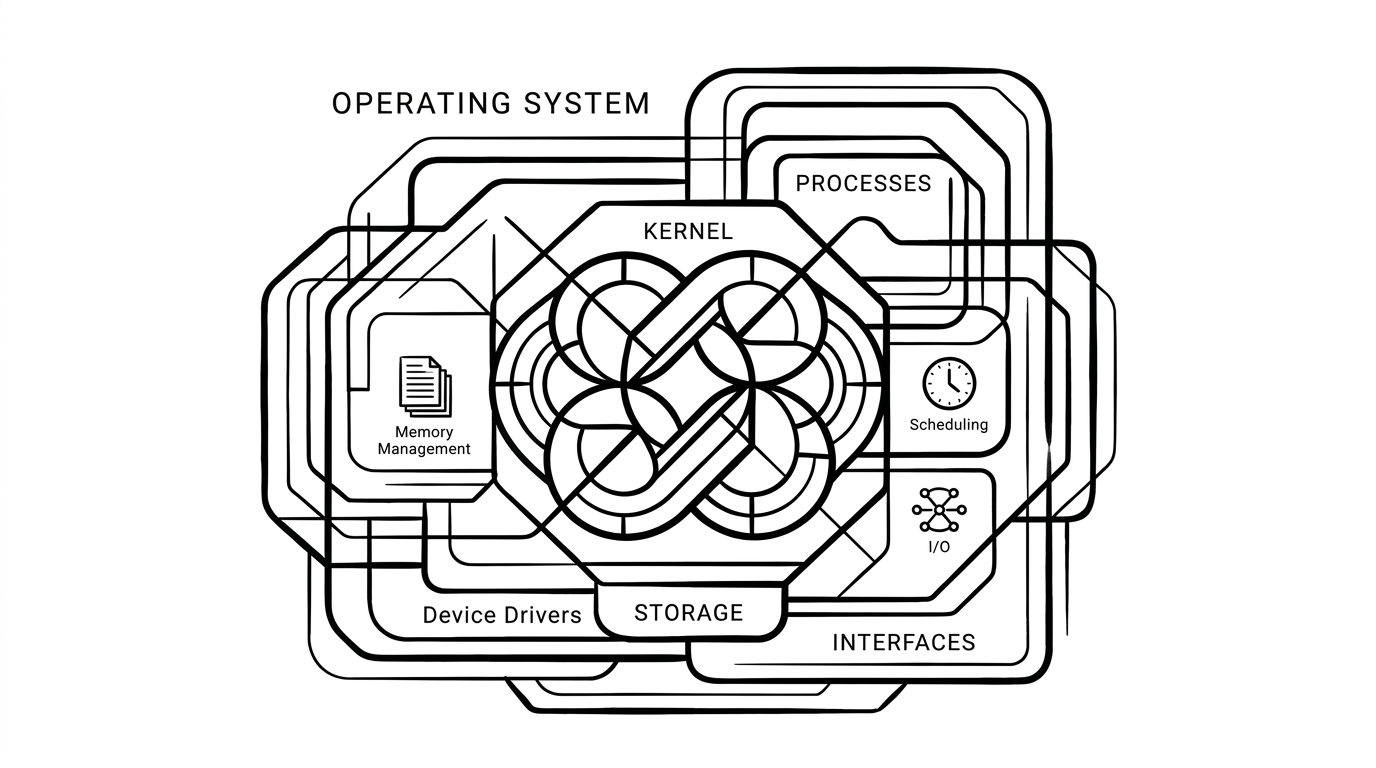
When a business moves its operations onto a unified system, it is often looking for speed. But speed without a specification is just a faster way to create technical debt. To solve this, we use a specific architecture of guards, engines, and registries. This is the operating system for the products we build, ensuring that every interaction is predictable, measurable, and recoverable.
The Guard
The Guard is the first point of contact for any piece of data entering the system. It is a strict validation layer that sits in front of every API endpoint and every database mutation. Most systems use validation to provide helpful error messages to users; we use it to protect the integrity of the logic.
A Guard does not care about the "why" of a request. It only cares about the "is." If a payload is supposed to contain a 10-digit ISO timestamp and it arrives with 9, the Guard kills the process. There is no middle ground, no "best effort" parsing, and no type coercion. By enforcing these constraints at the edge, the internal logic of the software can remain lean. We don't have to write defensive code in the middle of a business process because the Guard has already guaranteed that the data is exactly what we expect it to be.
The Registry
If the Guard is the gatekeeper, the Registry is the memory. In our system, a Registry is more than a database; it is a versioned, immutable record of every state change. We treat data as a series of events rather than a collection of current values.
When a product uses a Registry, it isn't just overwriting a row in a table. It is appending a new fact to a ledger. This means we can reconstruct the state of any product at any specific millisecond in its history. If a user reports a bug that occurred at 2:14 PM on a Tuesday, we don't have to guess what happened. We can query the Registry for that exact timestamp and see the system exactly as it was. This level of specificity removes the "it works on my machine" ambiguity that plagues most software development.
The Engine
The Engine is where the actual work happens. This is the only place in the system where business logic is allowed to live. By separating the logic (the Engine) from the data (the Registry) and the validation (the Guard), we create a modularity that allows for rapid iteration without the risk of side effects.
ShadowBrain operates on the principle that Engines should be deterministic. Given the same input from a Guard and the same state from a Registry, an Engine must always produce the same output. This makes the system incredibly easy to test. We don't need to simulate complex environments or mock out dozens of dependencies. We just feed the Engine a known state and check the result. What we learned through building this way is that complexity doesn't come from the logic itself, but from logic that is tangled up with state and input validation.
The Contract
The glue that holds these parts together is the Contract. In a standard software model, components talk to each other through loosely defined interfaces. In our operating system, every interaction between a Guard, an Engine, and a Registry is governed by a hard Contract.
A Contract is a specification that defines exactly what one part of the system owes to another. It defines the inputs, the outputs, and the error states. If an Engine needs to calculate a shipping rate, the Contract specifies that it must receive a weight in grams and a destination zip code. If the Registry cannot provide that data, the Contract is breached, and the system halts the operation before any incorrect data can be written. This prevents the "silent failures" that lead to corrupted databases and frustrated users.
The Failure State
Every system fails eventually. The difference lies in how it fails. Most software tries to "fail soft," which often means continuing to run in a degraded or unpredictable state. Our system is designed to "fail loud."
When a Guard rejects a request or a Contract is breached, the system generates a specific, numbered error code and stops the transaction. This is a deliberate choice. A hard stop is a safety mechanism. It ensures that the system never enters an undefined state. Because our Registries provide a perfect audit trail, a hard stop isn't a catastrophe; it’s a data point. We can see exactly which Guard triggered, what the payload looked like, and why it was rejected.
This rigor is what allows a small team to build and maintain high-stakes software. By moving the complexity into the system architecture—the operating system—the products themselves can remain simple, sharp, and effective. A system that cannot refuse a bad request eventually loses the capacity to guarantee a good one.
Weekly Briefing
The studio briefing.
What we’re building across the portfolio, every Monday.
Written by
Founder, Total Ventures
Solo-founder building and operating a multi-brand product studio with AI agents. Writing about building, operating, and shipping.