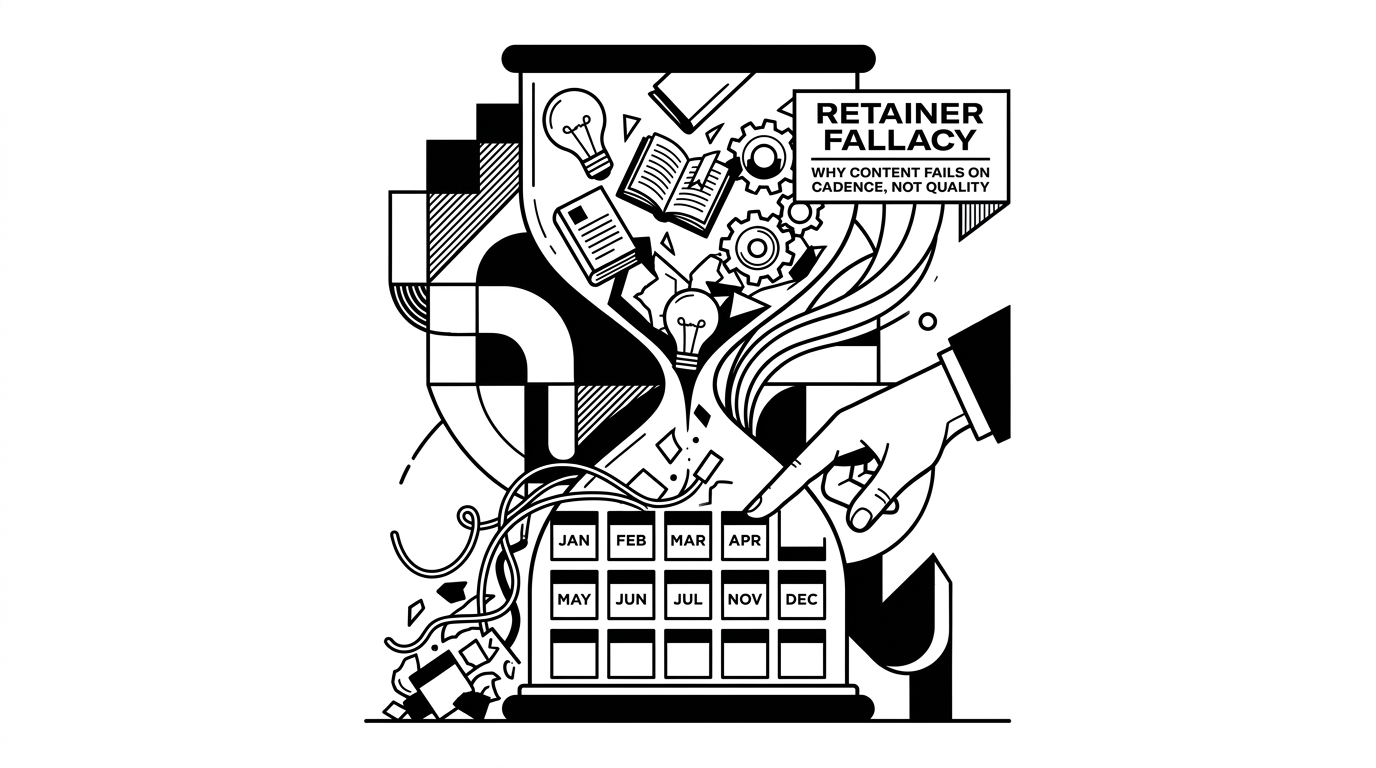
Last spring, an enterprise team reviewed eleven draft articles across thirty-four comment threads before letting the entire folder sit untouched for six months. The draft quality was fine. The prose was clean, the technical details were accurate, and the visual assets matched the brand guidelines. But every piece required four human sign-offs, two review meetings, and a manual upload process that felt like dragging a boulder up a dirt road.
When content output stalls, the standard instinct is to shop for an agency. You sign a contract for four long-form posts and eight social updates every thirty days. You assume that paying someone else to produce the material will fix the silence on your blog. A month later, the deliverables arrive in your inbox. Then they sit there, waiting for someone on your team to find an hour between meetings to read them, suggest edits, and copy them into your publishing tools.
The Misdiagnosed Problem
Most software leaders assume their primary publishing problem is quality. They tell themselves that if they had sharper writers or better designers, their media channels would finally take off.
That diagnosis is almost always wrong. If you look closely at teams that struggle to publish, the bottleneck isn't talent or ideas. It's momentum. Drafts sit in shared folders. Graphics stay locked in preview links. The review cycle takes three times longer than the actual writing.
An agency retainer solves for volume of production, not for the friction of publishing. It dumps more work onto a pipeline that was already clogged. You haven't fixed the pipe; you've just bought more water.
Deliverables Versus Engines
A retainer buys deliverables. It guarantees that someone will hand you four documents or six images on the first of every month. What it cannot guarantee is that those pieces will ever reach an audience, because a deliverable is static. It sits on the floor until someone picks it up and carries it across the line.
A publishing system works differently. It treats release work the same way good engineering teams treat software deployments. Instead of starting from scratch every time a piece is finished, a system defines clear rules for how an idea moves from an outline to a live page without requiring a committee debate at every step.
When you build a pipeline instead of buying deliverables, the schedule becomes the driver. A post goes out on Tuesday morning not because everyone spent Monday polishing it, but because the pipeline handles formatting, asset generation, and distribution automatically.
Take a studio tool like Inky. Instead of drafting a manuscript in a silo and worrying about layout design later, the system transforms structured markdown text straight into print-ready layouts and digital assets in a single step. The focus shifts from managing administrative drag to letting the pipeline do the manual lifting.
Why Cadence Outperforms Polishing
A single flawless piece published once a quarter does very little for a software product. Modern distribution rewards steady, compounding presence. When you publish on a predictable cadence, a few useful things happen at once.
First, you shorten your feedback loop. You find out what your audience cares about by looking at real responses to published work, not by debating what might work inside an internal review meeting. Second, you lower the emotional stakes of any individual post. When a team publishes every week, no single post has to carry the weight of the whole business. If an article lands well, great. If it quietly misses, the next one goes out on Thursday anyway.
Retainers make each deliverable feel expensive and heavy, which encourages teams to polish every sentence until the original point is smoothed away. A system makes publishing feel lightweight, which encourages teams to share what they actually know.
Building a Schedule That Doesn't Negotiate
Moving from a retainer mindset to a system mindset starts with treating distribution as infrastructure.
Start by removing approval loops that don't add technical accuracy. If a draft is factual and clear, it doesn't need three layers of stylistic sign-off. Next, standardize your formats. When every piece follows a predictable structure, your team spends zero time deciding how to layout a heading or where to put an image. Finally, automate the manual handoffs. Formatting, image production, and channel delivery should happen automatically as part of the build step.
When you fix the pipeline, quality usually takes care of itself. Writers produce better work when they know it will actually see the light of day, and readers respond to teams that show up consistently.
If your blog or feed has been quiet for two months, stop shopping for agency retainers. Build a system that makes publishing the path of least resistance, and let the schedule do the work.
Weekly Briefing
The studio briefing.
What we’re building across the portfolio, every Monday.
Written by
Founder, Total Ventures
Solo-founder building and operating a multi-brand product studio with AI agents. Writing about building, operating, and shipping.