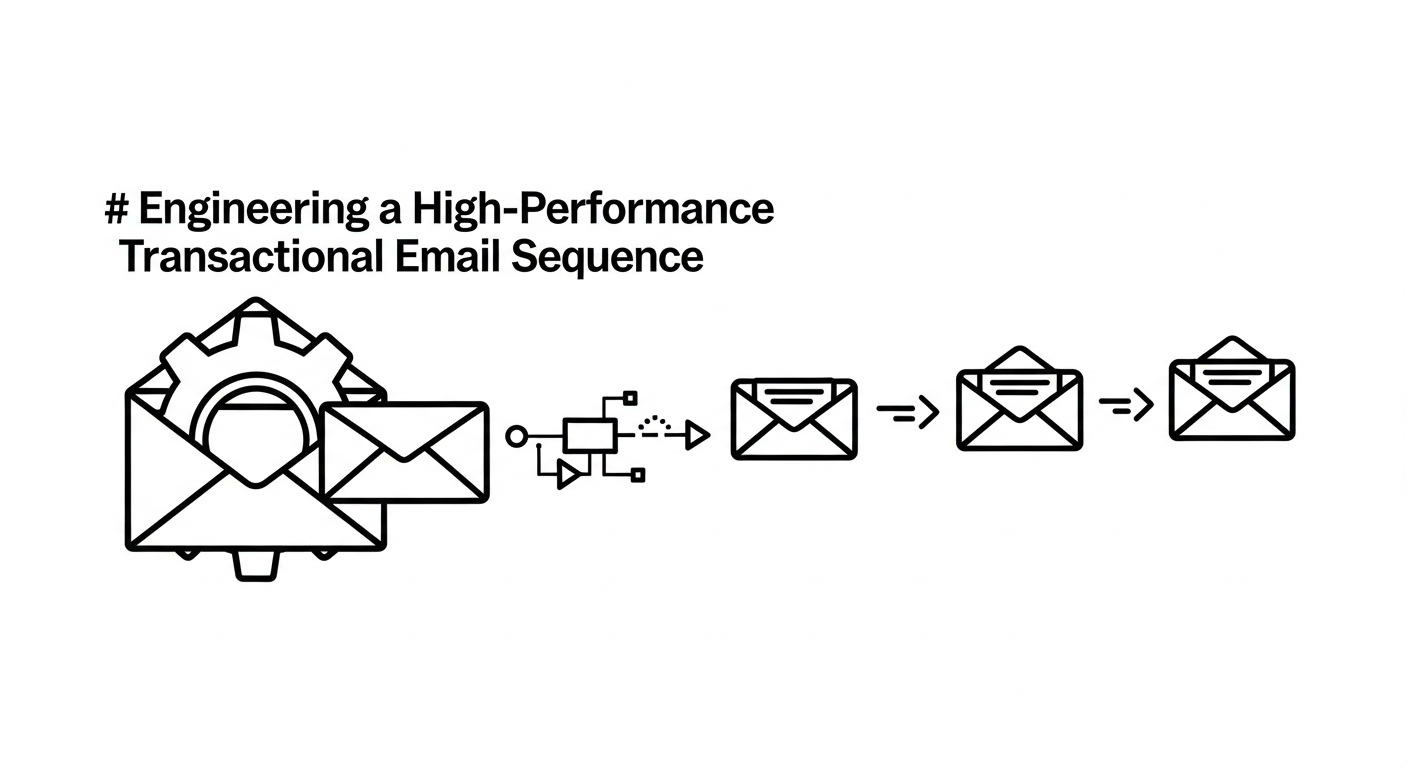
Engineering a High-Performance Transactional Email Sequence
A look at how we engineer transactional email sequences across the Total Ventures portfolio to drive retention and clarity without the marketing fluff.

Designing a transactional email sequence is often treated as a secondary task, relegated to the final hours before a product launch. At Total Ventures, we view these sequences as a core component of the product itself. When you are running a portfolio of purpose-built software, the communication between the application and the user is where the relationship is either solidified or lost.
We don't use these emails to broadcast marketing hype. We use them to guide the user toward the next logical action. This is the foundation of solo funnel engineering: building systems that work while you are focused on shipping the next update.
The Philosophy of Transactional Communication
In our portfolio, every email must serve a functional purpose. If an email doesn't help a user complete a task, understand a feature, or recover a lost state, it doesn't get sent. This understated approach builds trust. When a user sees an email from a Total Ventures product, they know it contains necessary information, not a request for a review or a generic newsletter.
A well-engineered transactional email sequence acts as a silent concierge. It anticipates the friction points in the user journey and provides the solution before the user has to reach out to support. We have found that by focusing on clarity over persuasion, we reduce the burden on our small team and improve the overall user experience.
The Welcome Sequence: Engineering the First Impression
The welcome email is the most critical part of the sequence. It is triggered the moment a user creates an account in our database. Instead of a generic greeting, we focus on activation.
We structure our welcome emails to answer three questions:
- What is the immediate next step?
- Where can the user find documentation?
- How can they get help if they are stuck?
By treating the welcome email as a technical onboarding step rather than a marketing opportunity, we ensure the user moves from sign-up to first-use as quickly as possible. In our recent product updates, we have moved toward a single-call-to-action model. We found that providing one clear path is more effective than offering a menu of options.
Handling Abandoned Carts and Incomplete Onboarding
For our software products that involve a checkout or a complex setup process, the abandoned cart or incomplete setup email is a vital recovery tool. The core of a robust transactional email sequence lies in its timing and its tone.
We avoid the aggressive tactics common in the industry. We don't offer expiring discounts or use high-pressure language. Instead, we send a factual reminder. We assume the user was interrupted. Our recovery emails simply provide a direct link back to the exact state where they left off.
This requires a tight integration between our application's state management and our email delivery service. We track the progress of a user through the funnel in a relational database and trigger the email only after a specific period of inactivity. This precision ensures we are helpful, not intrusive.
Post-Purchase and Retention Logic
Once a transaction is complete, the sequence shifts toward retention. This is where many founders stop, but for a portfolio company, this is where the long-term value is built.
The post-purchase sequence should confirm the technical details—receipts, access keys, or login credentials—and then transition into a drip that highlights specific features. We ship these updates in small batches, observing how users interact with the product before refining the copy.
We have moved toward using a managed data layer to track feature adoption. If a user has already used a specific feature, our transactional email sequence logic skips the email explaining that feature. This level of specificity prevents the user from feeling like they are just another entry in a mailing list.
Technical Implementation Across the Portfolio
Building in public means being transparent about our process. Across all five of our current projects, we use a unified approach to email delivery. We separate the logic of when to send an email from the content of the email itself.
- The Trigger Layer: Our backend services monitor for specific events—a new row in the users table, a status change in an order, or a period of inactivity.
- The Orchestration Layer: A central service handles the timing and logic. This ensures that we don't double-send emails if a user performs multiple actions in a short window.
- The Template Layer: We use a standardized, minimal design for all portfolio companies. This reduces the time spent on design and ensures that the focus remains on the text.
By using a relational database to manage these states, we can ensure that every transactional email sequence is accurate and timely. We don't rely on third-party marketing automation tools to hold our user data; we keep the source of truth within our own infrastructure.
Lessons Learned from Shipping Sequences
One of the most significant lessons we have shared across the portfolio is the importance of the "Reply-To" address. We never use a "no-reply" address. Every transactional email we send is an invitation for a founder-to-user conversation. When a user replies to an automated receipt with a question, it goes directly to the team. This feedback loop is more valuable than any analytics dashboard.
We also prioritize plain-text versions of every email. While our templates are minimal, the plain-text version ensures deliverability and accessibility. It fits our understated brand voice—it looks like a personal note from a founder, because in many ways, it is.
Conclusion
Engineering a transactional email sequence is not about marketing; it is about product integrity. It is the wiring that keeps the user connected to the value of the software. By focusing on specific triggers, factual copy, and technical precision, we build products that stand on their own.
We are shipping updates to our internal email orchestration logic this week to further streamline how we handle these sequences across the portfolio. As we continue building in public, we will share more about how these systems evolve.
defaultCta: See the portfolio — totalventures.io
Builder resources
See the full library →
Playbooks, checklists, and tools from running Total Ventures.
Studio Update
What we're building, in your inbox.
Weekly notes on the brands, the stack, and the loop.

