

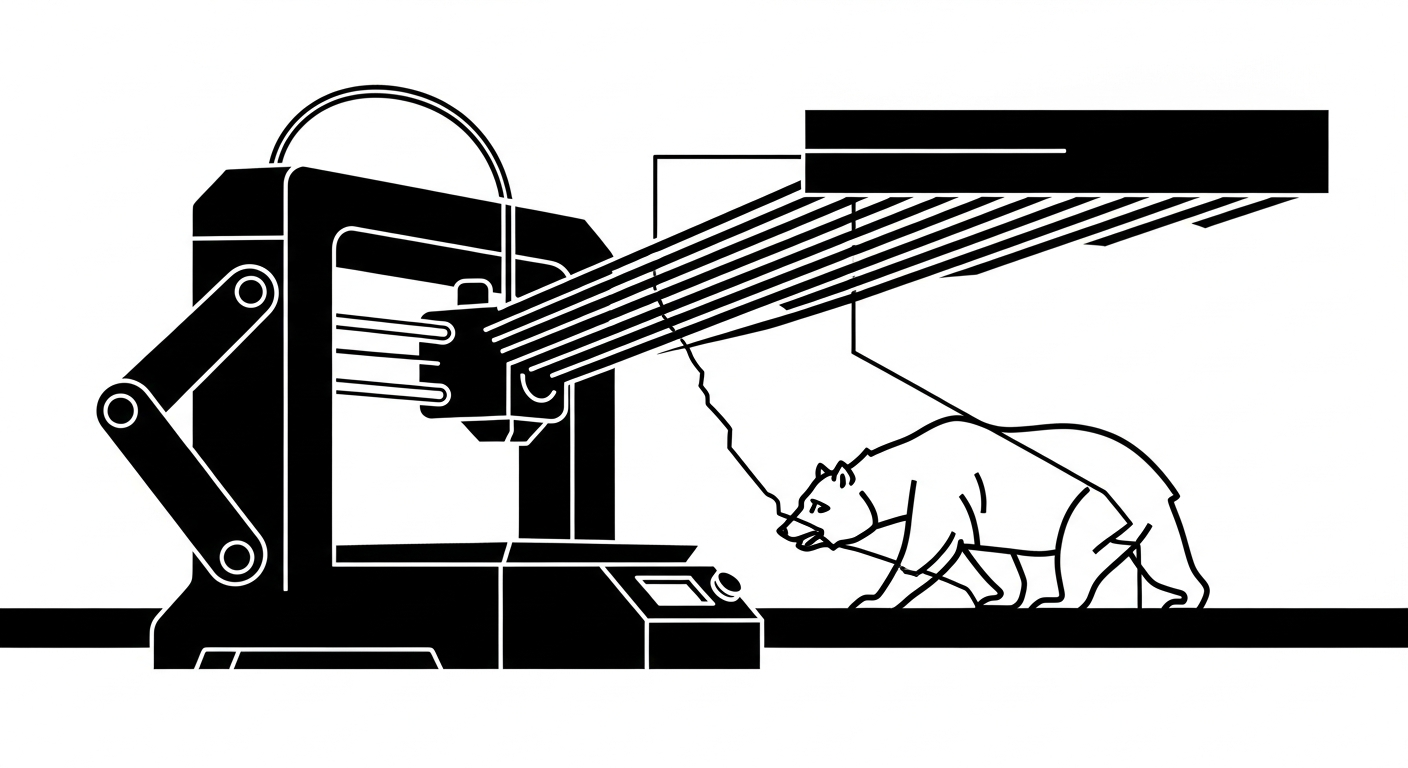
If you're a student learning design, an educator teaching manufacturing, or a business prototyping new products in California, a new piece of legislation could make your 3D printer off-limits. Assembly Bill 2047, ostensibly aimed at regulating 'ghost guns,' has a reach so broad it threatens to sweep up legitimate 3D printing operations across the state.
This isn't just about firearms; it's about the tools and processes that drive innovation and education. The bill's language, as currently written, could effectively ban the possession and use of many 3D printers by anyone other than licensed manufacturers, creating a significant hurdle for schools, small businesses, and even hobbyists.
What is AB 2047 and Why Does it Matter?
AB 2047, introduced by Assemblymember Mike Gipson, seeks to amend existing laws concerning unserialized firearms. The core intent is to prevent the creation of untraceable weapons, often referred to as 'ghost guns.' While the goal of public safety is understandable, the method proposed in the bill uses definitions that extend far beyond its stated purpose.
The bill defines a "3D printer" as "any computer-aided manufacturing device capable of producing a three-dimensional object from a digital design file." This broad definition encompasses virtually every 3D printer on the market, from a hobbyist's FDM machine to an industrial-grade SLA or metal printer. It doesn't differentiate based on material, size, or intended use.
Furthermore, the bill makes it unlawful for any person, other than a federally licensed firearms manufacturer, to "possess, purchase, or receive a 3D printer capable of manufacturing a firearm component." This is where the problem truly begins. Most modern 3D printers, by their very nature, are capable of printing a wide range of objects, including, hypothetically, a firearm component. The bill doesn't require intent or actual production; mere capability is enough.
The Impact on Education
Consider a high school shop class or a university engineering department. 3D printers have become indispensable tools for teaching design, rapid prototyping, and advanced manufacturing concepts. Students use them to create models for architecture, functional parts for robotics, and prototypes for entrepreneurial projects. Under AB 2047, these institutions could find themselves in a legal gray area, or worse, forced to remove valuable educational equipment.
Imagine a student working on a capstone project that involves designing a custom enclosure for an electronic device. The printer they use for this perfectly legitimate purpose could be deemed illegal because it could theoretically print a firearm part. This chilling effect could stifle innovation and limit access to critical skills for the next generation of engineers and designers.
The Impact on Businesses
Small businesses, startups, and even established companies rely on 3D printing for rapid prototyping, custom tooling, and short-run manufacturing. From medical device companies creating custom implants to automotive shops fabricating specialized parts, 3D printers are a cornerstone of modern product development. AB 2047 could make these essential tools inaccessible.
For a small design studio, the ability to quickly iterate on a physical prototype is crucial for client presentations and product refinement. If they can no longer legally own or operate a 3D printer, their ability to compete and innovate would be severely hampered. This isn't just about the tech industry; it impacts any business that leverages additive manufacturing for its operations.
The Impact on Innovation and Research
California has long been a hub for technological innovation. Restricting access to 3D printing technology could have far-reaching consequences for research and development. Universities and private research labs use 3D printers for everything from creating custom lab equipment to developing new materials and processes.
This bill, if passed in its current form, could push innovative research and development out of California, making it harder for the state to maintain its leadership in technology and manufacturing. The unintended consequences of such broad legislation can often outweigh the intended benefits, especially when it comes to rapidly evolving technologies.