There is a specific kind of quiet chaos that happens when you move from building one product to managing five. In the beginning, it feels like a superpower. You have your favorite tools, your go-to patterns, and a workflow that fits like a well-worn pair of boots. But as the portfolio grows, the gravity of your decisions starts to shift.
When we talk about multi-brand studio operations, we aren’t just talking about logos and landing pages. We’re talking about the plumbing. We’re talking about the invisible architecture that allows a small team to punch way above its weight class without burning out or shipping a mess.
The central tension is simple: do you build a monolithic engine that powers everything, or do you let every brand be its own island? If you share too much, you move slowly because a change in one place might break four other things. If you share too little, you spend your life fixing the same bug in five different places.
Here is how we think about the balance between sharing and forking.
The Gravity of the Shared Stack
Efficiency in a studio environment comes from reducing the number of decisions you have to make twice. When we start a new project, we don’t want to debate which database structure to use or how to handle user sessions. We want to get straight to the part where we solve the user’s problem.
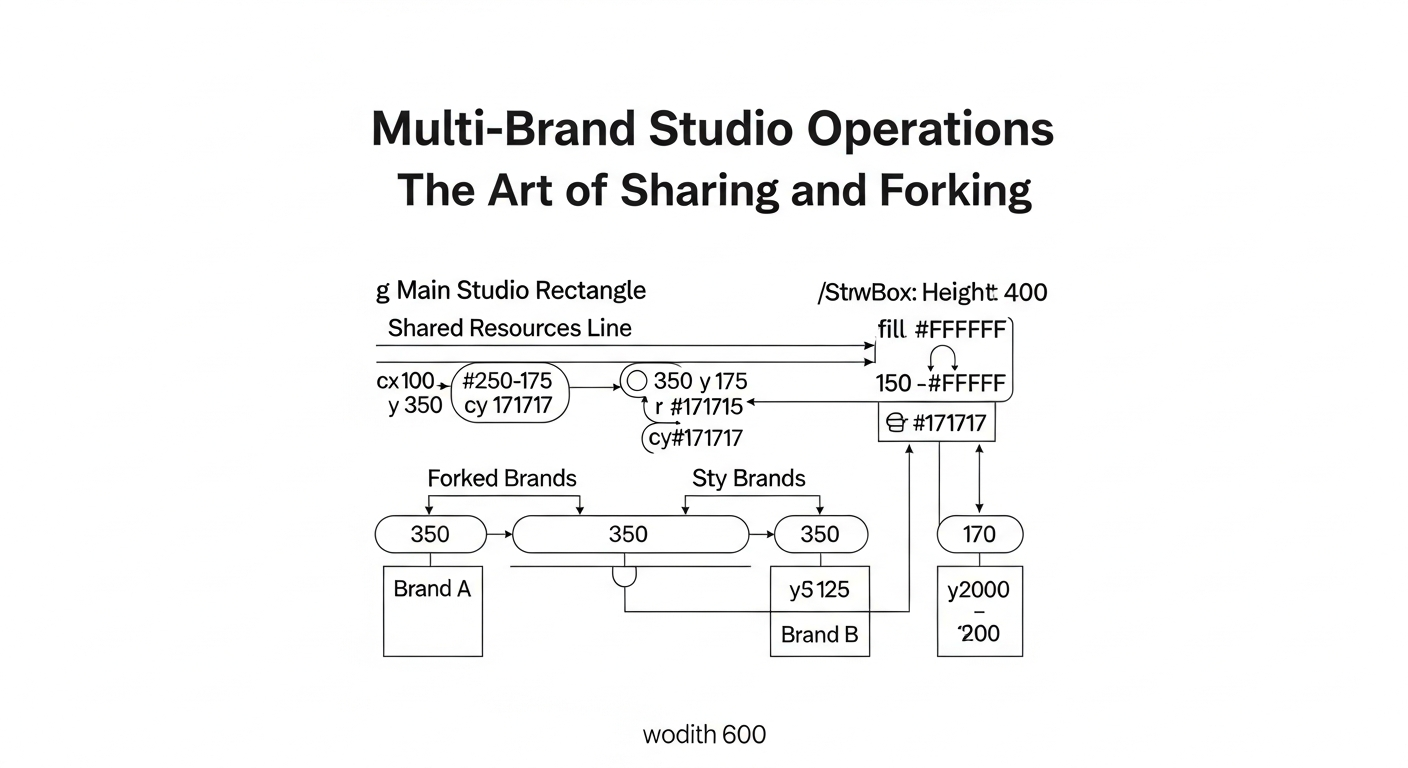
Operating multiple brands from one stack means creating a "base layer" of infrastructure. This usually includes your deployment pipeline, your primary data handling patterns, and your core authentication logic. By keeping these consistent, you create a predictable environment. When you jump from working on Brand A to Brand C, the scenery changes, but the controls are in the same place.
This shared foundation is the heartbeat of our multi-brand studio operations. It allows us to ship updates across the entire portfolio simultaneously. If we find a better way to handle image optimization, every brand we’ve built gets faster. That’s the upside of the shared stack: the rising tide lifts all boats.
Identifying the Common Denominator
The trick is knowing exactly what belongs in that base layer. We’ve found that the most successful shared components are the ones that are functional rather than aesthetic.
Infrastructure and Deployment
Your hosting environment and CI/CD pipelines should almost always be shared. There is very little value in having three different ways to deploy code. A unified pipeline means that security patches and performance improvements happen everywhere at once.
The Data Layer
While the data itself is siloed for each brand, the way you interact with it should be standardized. Using a consistent relational database pattern or a unified approach to API design means your team doesn't have to context-switch between different mental models of how data flows.
Component Libraries (The Logic, Not the Look)
We like to share the behavior of components—how a modal opens, how a form validates, how a dropdown filters—while keeping the visual layer flexible. This allows each brand to have its own soul while benefiting from the rigorous testing we’ve done on the underlying logic.
The Signal to Fork
Sharing is great until it isn't. There is a point where the shared stack becomes a straitjacket. You’ll know you’ve reached it when you start writing "if" statements to handle brand-specific exceptions in your core code.
If Brand B needs a complex feature that the other four brands will never use, don't try to force it into the shared core. This is the moment to fork.
Forking doesn't mean you're abandoning your standards; it means you're acknowledging that this specific product has earned its own path. We fork when the requirements of a brand diverge so significantly that maintaining a shared codebase would require more effort than managing two separate ones.
In our multi-brand studio operations, we look for these three signals to fork:
- Performance constraints: If one brand requires a specialized data structure to handle high-frequency updates that would slow down the others.
- Regulatory or compliance needs: If one product enters a market with strict data residency or privacy requirements that don't apply to the rest of the portfolio.
- Product-Market Fit pivots: If a brand is evolving into a completely different category of software, it’s time to let it go its own way.
Managing the Human Side of the Stack
Software is built by people, and the way you organize your code will eventually dictate how you organize your day. When you’re running five or more brands, the biggest risk isn't technical debt—it's cognitive load.
We try to keep our operations as understated as possible. We don't use heavy project management frameworks or endless meetings. Instead, we rely on the clarity of our stack. Because we’ve standardized our multi-brand studio operations, a developer can move between projects without a week-long onboarding process.
This flexibility is what makes the studio model work. It allows us to follow our curiosity. If we have a sudden insight for a tool we built a year ago, we can jump back in, make the change, and ship it within the hour because the environment is familiar.
What We’ve Learned About Scale
Building software worth using means caring about the details, even the ones the user never sees. It means realizing that your internal tools and your operational choices are just as much a "product" as the apps you sell.
If you’re starting to feel the friction of managing multiple products, take a look at your plumbing. Are you reinventing the wheel every time you launch? Or are you building a foundation that makes the next launch easier?
We’ve found that the most sustainable way to grow is to be opinionated about your core and flexible about your edges. Keep your infrastructure boring so your products can be interesting.
See what we've made — totalventures.io
Weekly Briefing
The studio briefing.
What we’re building across the portfolio, every Monday.
Written by
Founder, Total Ventures
Solo-founder building and operating a multi-brand product studio with AI agents. Writing about building, operating, and shipping.