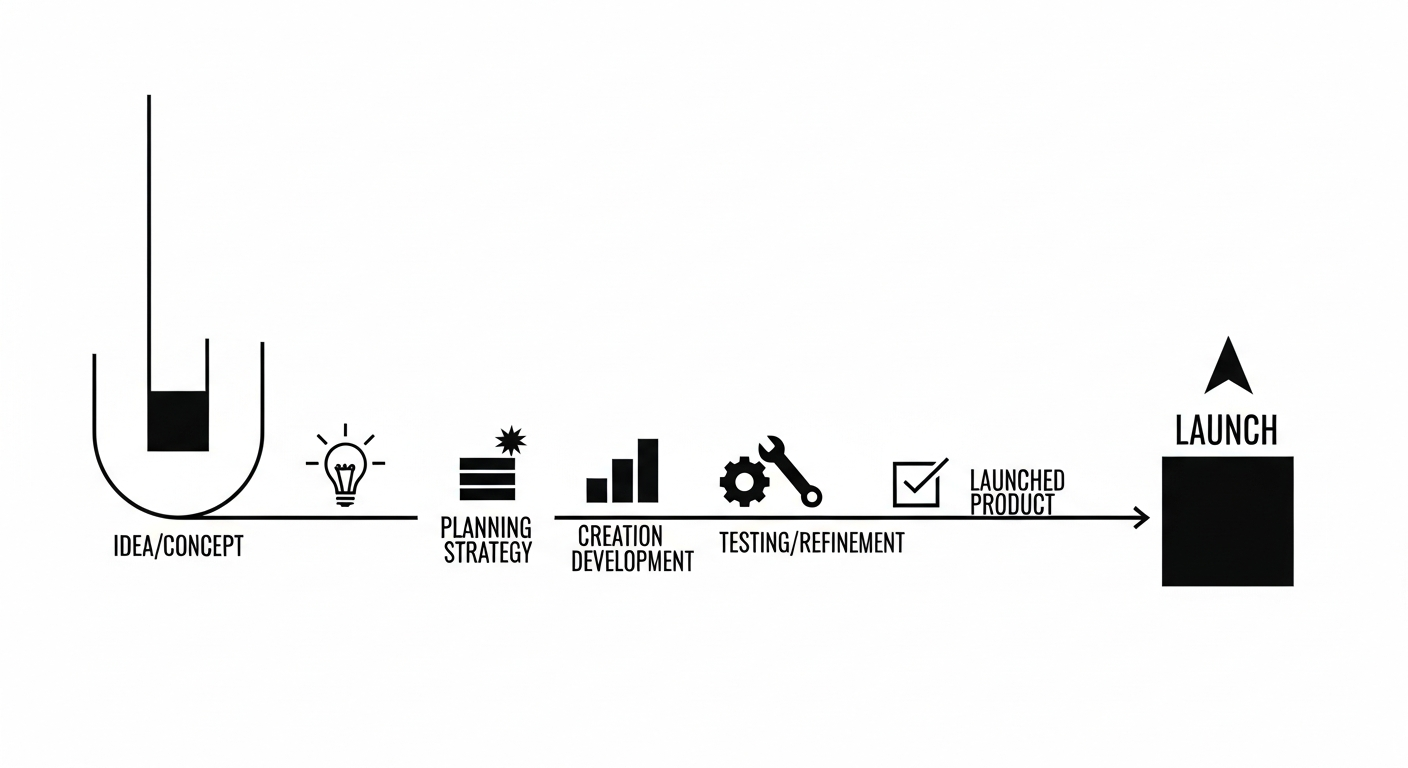
You have an idea, a vision for a product that solves a real problem, and the drive to build it yourself. But going from that initial spark to a launched product, especially as a solo founder, can feel like navigating a maze. What do you build first? What can you skip? How do you ensure your paid-offer-stack is ready for customers? This is the exact sequence every Total Ventures brand runs through to launch software worth using.
The Solo Founder's Dilemma: Build or Ship?
It's easy to get caught in the trap of endless building. Polishing features, tweaking designs, adding 'just one more thing' before you feel ready. But the truth is, your product isn't real until it's in the hands of users. The goal isn't perfection; it's impact. Our checklist prioritizes shipping, ensuring you're always moving towards a tangible launch.
Phase 1: Validate and Define (Weeks 1-2)
Before you write a single line of code, you need to be certain your idea has legs. This phase is about understanding your potential users and the problem you're solving.
1. Problem-Solution Fit
- Identify the core problem: What specific pain point are you addressing? Be precise. "People need better project management" is too broad. "Freelancers struggle to track client communication across multiple platforms" is better.
- Who experiences this problem? Define your ideal user. What are their existing habits, frustrations, and aspirations?
- Propose a minimal solution: What's the absolute simplest way your product can solve this core problem? Resist the urge to add bells and whistles.
2. User Interviews (Informal)
- Talk to 5-10 potential users: Don't pitch your solution yet. Ask open-ended questions about their current struggles related to the problem you've identified. Listen more than you talk.
- Look for patterns: Are multiple people expressing the same pain? Do they use similar language to describe it? This validates the problem's existence and severity.
3. Define Your MVP (Minimum Viable Product)
- List core features: Based on your problem-solution fit and user interviews, what are the absolute essential features required for your product to deliver its core value?
- Ruthlessly cut: If a feature isn't critical for solving the primary problem, it's out of the MVP. This is where many solo founders get stuck, trying to build too much too soon. Your first version should do one thing exceptionally well.
Phase 2: Build the Core (Weeks 3-8)
Now it's time to build. This phase focuses on creating a functional, stable core product that delivers on your MVP promise.
1. Technical Foundation
- Choose your stack wisely: Opt for technologies you're proficient in or can learn quickly. Speed and stability are paramount for a solo founder. Don't over-engineer.
- Set up basic infrastructure: Hosting, database, version control. Get the essentials in place early.
2. Develop Core Features
- Iterate quickly: Build features one by one, testing as you go. Focus on functionality over aesthetics at this stage.
- Prioritize user flow: Ensure the path a user takes to achieve the core value is intuitive and smooth. Every click should feel purposeful.
3. Basic UI/UX
- Functional design: Your product doesn't need to win design awards yet, but it needs to be usable and clear. Use a simple design system or framework to maintain consistency.
- Accessibility basics: Consider basic accessibility from the start. It's easier to build in than to retrofit.
Phase 3: Prepare for Launch (Weeks 9-10)
The product is functional. Now, shift your focus to getting it ready for the public and setting up your paid-offer-stack.
1. Onboarding and User Experience Refinement
- First-run experience: Design a clear onboarding flow that guides new users to their first 'aha!' moment quickly.
- Error handling: What happens when things go wrong? Provide helpful, human-readable error messages.
- Performance optimization: Shave off unnecessary load times. A smooth experience builds trust.
2. Pricing and Payment Integration
- Define your pricing model: How will you charge? Subscription, one-time, freemium? Research competitors and consider your value proposition.
- Integrate a payment gateway: Stripe, Paddle, or similar. Ensure it's secure and easy for users to purchase. This is a critical part of your paid-offer-stack.
- Subscription management: If applicable, set up how users can manage their subscriptions, upgrade, or cancel.
3. Essential Marketing & Support Assets
- Simple landing page: Clearly explain what your product does, who it's for, and how to sign up/buy. Focus on benefits, not just features.
- Basic help documentation/FAQ: Answer common questions to reduce support load.
- Support channel: A simple email address or contact form is sufficient to start.
- Privacy Policy & Terms of Service: Non-negotiable legal necessities.
Phase 4: Launch and Learn (Ongoing)
Launch isn't the end; it's the beginning. This phase is about getting your product out there and continuously improving based on real-world feedback.
1. The Soft Launch
- Share with a small group: Friends, family, early adopters from your interviews. Get their feedback on the entire experience, from signup to core usage.
- Fix critical bugs: Address any show-stopping issues before a wider release.
2. Public Launch
- Choose your channels: Where will you announce your product? Product Hunt, relevant subreddits, Twitter, your personal network. Focus on where your target users spend time.
- Craft your message: What's the core value proposition you want to communicate? Keep it concise and compelling.
3. Listen and Iterate
- Collect feedback: Set up analytics to understand usage patterns. Actively solicit feedback from users through surveys or direct outreach.
- Prioritize improvements: Don't try to implement every suggestion. Focus on changes that will have the biggest impact for the most users.
- Communicate with users: Keep them informed about updates and new features. Building a community around your product is invaluable.
This checklist isn't a rigid timeline, but a framework. The exact duration of each phase will vary based on your product's complexity and your available time. The key is to move through it systematically, always prioritizing what gets you closer to a valuable, launched product and a robust paid-offer-stack.
See what we've made — totalventures.io
Stay close to the work by following us on X or subscribing to our RSS feed.
Weekly Briefing
The studio briefing.
What we’re building across the portfolio, every Monday.
Written by
Founder, Total Ventures
Solo-founder building and operating a multi-brand product studio with AI agents. Writing about building, operating, and shipping.